In Asian business, alcohol is not just a drink, it serves as a medium to "lower the social barrier." It allows people from professional roles to true character, and it's often the key to move a partnership beyond contract to trust.

I once attended CPHI Worldwide in Milan, where I had a business dinner with a Korean client.
Although I had Korean classmates during my time studying in the UK, that was student interactions. This was my first real exposure to Korean-style business hospitality.
The company we met was a family-run pharmaceutical business, built by a couple in their 50s. Their son was preparing to take over, accompanied by a senior employee. On our side, three of us represented the company.
Since we had hosted them in Taiwan before, this dinner was their way of returning the favor. They chose an authentic Korean restaurant in Milan.
By that point, the formal business discussions had already concluded during the day.
Dinner was no longer about business—it was about understanding people.
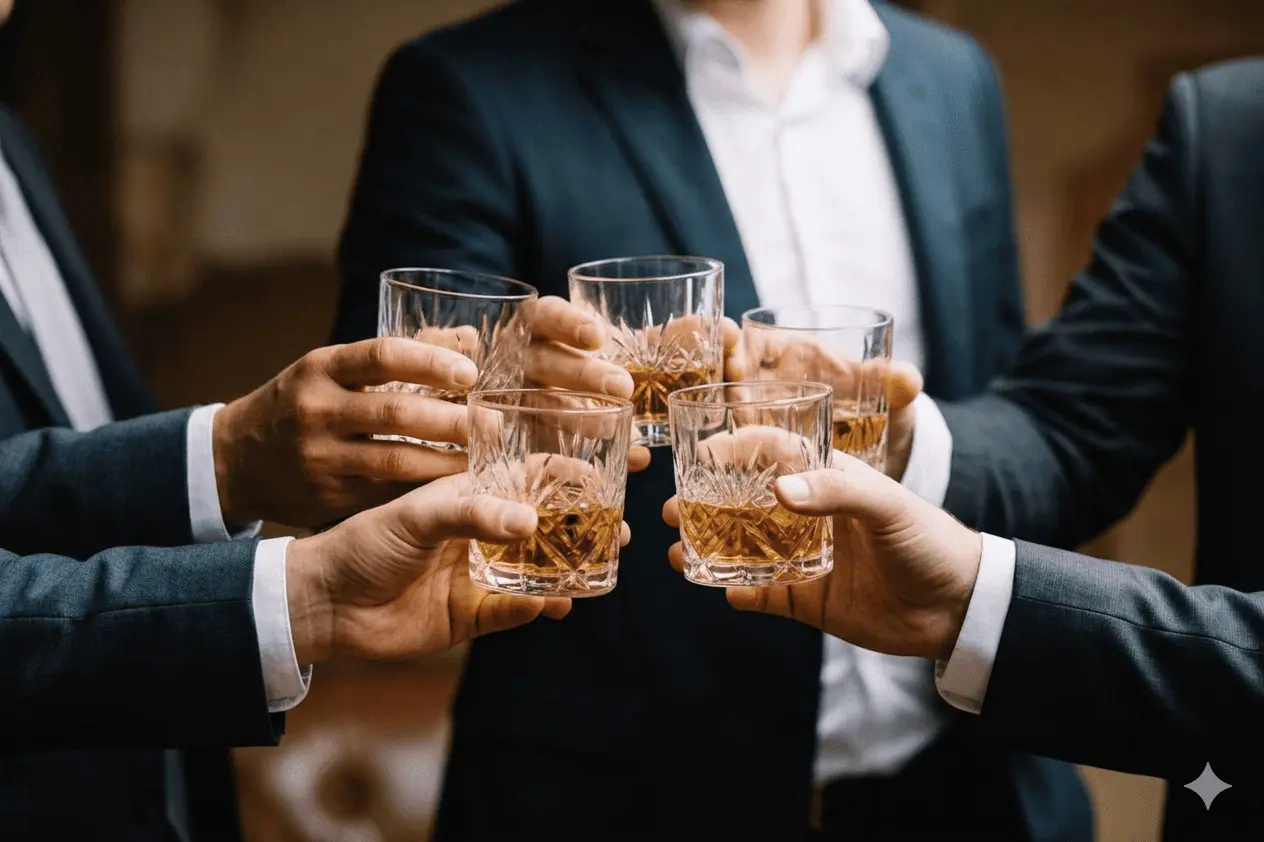
As the dinner progressed, our Korean client began inviting everyone to drink soju. The restaurant was lively—almost entirely filled with Korean guests.
Korean food, Korean conversations, soju, beer… and eventually the classic combination: soju + beer.
With their warm hospitality, the atmosphere quickly shifted. What started as a formal gathering gradually became relaxed and energetic. With each drink, people moved from professional roles back to being individuals.
At one moment, I had a strange thought:
Was I in Milan, or in Korea?
Culture is not defined by geography, but by people. When a space is filled with a certain group, it becomes their cultural domain.
After the restaurant closed, my Taiwanese colleagues and I walked back to the hotel—about 30 minutes on foot.
To be honest, I hadn’t been drunk in a long time. That slightly tipsy feeling felt oddly nostalgic. I went straight to bed and still woke up on time the next morning for the exhibition.
Getting drunk that night reminded me of my early days at work.
Back then, I barely drank and disliked social drinking altogether. I believed that doing a good job should be enough—why waste time on drinking?
But once, I was brought to a client meeting by chairman. After just a few drinks, I completely lost my composure. In the end, my boss had to step in and drink on my behalf. It was… not my proudest moment.
Later, my boss told me something:
“In Asia, drinking during business occasions is almost unavoidable. If that’s the case, instead of resisting it, why not learn to enjoy it?”
At the time, I didn’t agree.
But over the years, I’ve come to interpret that differently:
When something is unavoidable, it’s better to understand and manage it than to resist it.
(Years later, I actually asked him about this. He said he didn’t mean anything that profound—he just thought I was too uptight and wanted me to loosen up a bit. Fair enough.)
Later, when I studied in the UK, drinking was also common in social occasions—though not in a competitive way. People simply drank at their own pace.
Combined with the cold weather, a bit of whisky before heading out in winter almost felt necessary. (No, I’m not an alcoholic :p)
Over time, I gradually adapted to alcohol.
In a way, I unknowingly unlocked a skill that is surprisingly useful in Asian business culture.
With more experience, I began to see a pattern in Asian business culture:
Alcohol, here, acts as a social equalizer.
It lowers defenses and allows people to step outside their roles, revealing their genuine personalities and thoughts.
And often, it is these informal moments that determine whether future collaboration will truly work.
If you already enjoy drinking, then business hospitality in Asia might feel natural—even enjoyable.
But if you’re like I used to be, feeling resistant to this culture—that’s okay.
You don’t have to like it. But you do need to understand it.
You may choose not to drink, but understanding this dynamic will take you further.
Because what you’re drinking is not just alcohol — it’s the distance between people.