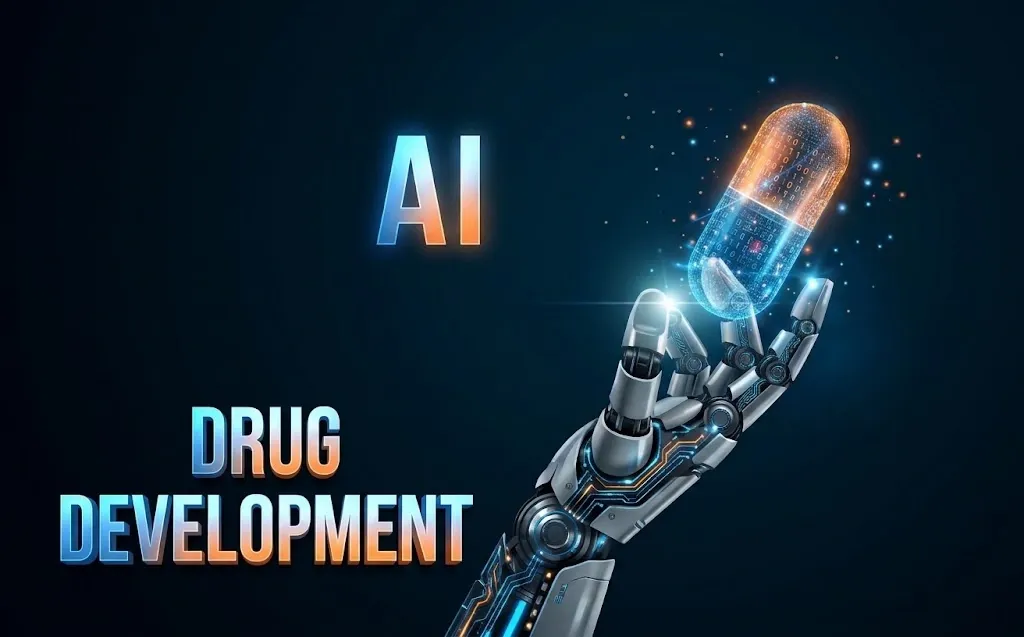
Can we trust AI-developed drugs? Explore how AI helps drug discovery, why animal studies and clinical trials still matter, and what really proves a drug is safe and effective

Quite a while ago, I attended a church gathering and had a casual chat with a professor in engineering.
He knew my background, and AI was only just starting to get people's attention back then. He asked me a question:
“Can we really trust drugs developed by AI?”
Honestly, I can't remember how I answered him at the time.
But today, I think it's a question worth discussing. Many companies are now applying AI in different fields, and drug development is one of them.
So, can we really trust drugs discovered or developed with the help of AI?
Traditional drug development generally goes through several stages:
Drug discovery → Laboratory studies → Animal studies → Human clinical trials → Regulatory approval
Researchers first identify potential drug candidates. They then test them in the lab and use animal studies to assess their preliminary safety and biological effects. After that, the candidates may enter human clinical trials to determine whether their safety and effectiveness are good enough to support approval.
Of course, the actual process is much more complicated than this. And not every drug candidate makes it all the way through.
AI can help at many stages. It can organize research data, predict molecular structures and binding interactions, screen potential drug candidates, help design new molecules, and even support clinical trial data analysis.
But one thing is important:
AI can help discover a drug. That doesn't mean the drug has been proven to work in humans.
Any new drug intended to treat a disease needs sufficient evidence to show that it is acceptably safe and effective for its intended use.
Whether animal studies can be reduced or replaced by alternative methods in certain situations is another question. AI is not a free pass to skip the necessary tests.
You might wonder: animal studies already provide a lot of useful information, so why do we still need human trials?
One reason is simple: humans and animals are not the same.
Take mice, for example. Humans and mice share a high proportion of homologous genes, but that doesn't mean their physiology, disease mechanisms, or drug metabolism work in exactly the same way.
Even when certain genes or proteins are very similar, biological differences can still lead to different responses to a drug.
For example, a drug may successfully inhibit tumor growth in mice. But when tested in humans, it may fail to deliver the expected results because of differences in tumor biology, immune responses, drug metabolism, or other factors.
The reverse is also possible. Toxic effects observed in animals don't necessarily occur in exactly the same way in humans.
Animal studies therefore provide important early evidence, but they are not a guarantee of success in humans.
Ultimately, human clinical trials are needed to evaluate whether a drug is safe, whether it actually works, and whether its benefits justify its intended use.
To understand AI's role in drug development, let's go back to the basics of biomedical science.
In simple terms, physiology helps us understand how a healthy body works. Pathology studies the abnormalities caused by disease. Pharmacology explores how drugs interact with the body and affect disease.
Researchers try to understand the mechanisms behind a disease and then design or identify drugs that can interfere with those mechanisms. The goal is to restore normal function or, at least, improve the patient's condition.
For example, a disease may be linked to abnormal activity in a particular protein. Researchers may then look for a small-molecule drug that can inhibit that protein.
Here's the problem: with so many potential molecules available, which ones should researchers study first?
This is where computing and AI can help.
In fact, researchers were already using computer simulations to screen potential drug candidates long before AI became a hot topic.
By setting different screening criteria, they could search through large numbers of molecules and identify candidates that might bind to a target protein and deserve further investigation.
Around 20 years ago, I chatted with graduate students working on this kind of research. They told me that computer programs could be very helpful, but they also had limitations.
For example, imagine researchers set eight screening criteria, and the system selects three potential drug candidates.
Then they change the order in which those eight criteria are applied, and suddenly, the system comes up with three completely different candidates?!
(Well, the computer is doing its best to find answers. But you might still need to check the logic behind those answers first.)
Of course, this was a research example I heard about back then. It doesn't mean all molecular simulation systems have the same problem.
But it highlights an important point:
A computer can calculate things quickly. That doesn't mean the input criteria, model assumptions, or final results are necessarily correct.
And AI can do more than simply speed up traditional computer simulations. It can learn patterns from large datasets, predict molecular properties, and even help generate new drug candidates.
These capabilities can be particularly valuable in the early stages of drug discovery.
For example, researchers can use AI to predict how a molecule might bind to a target protein. They can then examine its three-dimensional structure, hydrogen bonds, van der Waals forces, and other molecular interactions that may affect binding and biological activity.
This helps researchers decide which candidates are worth investigating further.
However, predicting that a molecule can bind to a target doesn't mean it will produce the desired therapeutic effect in humans.
Even if a molecule binds to the target protein, it may still have problems. It might be poorly absorbed, metabolized too quickly, fail to reach the right tissue, cause toxicity, or simply fail to improve the disease.
So, AI can help narrow the search and identify more promising candidates. But experimental validation is still essential.
I think this is an interesting question.
If AI can predict molecular properties more accurately, screen drug candidates more efficiently, and even design promising new molecules, could it shorten drug development timelines?
I think it could. But there's an important distinction:
Improving early-stage research efficiency doesn't mean we can skip later safety and efficacy testing.
AI may help eliminate less promising candidates, improve experimental design, and focus research resources on better options.
If early screening becomes more effective, researchers may be able to reduce some of the time and cost spent on trial and error.
But drug development is about much more than finding a molecule that binds to a target.
Researchers still need to understand how a drug is absorbed, distributed, metabolized, and eliminated. They also need to evaluate toxicity, dosage, safety, and clinical efficacy.
These questions cannot all be answered just because a computer produces an impressive-looking number.
Animal studies may also be reduced or partially replaced in certain areas as alternative testing methods and regulations evolve.
But that doesn't mean every drug can move directly from computer simulations to human use simply because AI is available.
After all, the goal of drug development is to treat patients, not to prove how impressive AI's predictions are.
AI can help researchers identify drug candidates faster. It may also improve R&D efficiency and reduce some of the costs associated with trial and error.
But there's still a long way to go from a promising molecule to a drug that can genuinely help patients.
AI can help us find the way. It might even help us plan a more efficient route.
But in drug development, finding a possible answer and proving the answer is correct are two different things.
I don't think that distinction will disappear anytime soon.
So, going back to the question the engineering professor asked me: “Can we really trust drugs developed by AI?” My answer today would be:
The real question isn't whether a drug was developed with AI. It's how the drug was tested, how much reliable evidence supports it, and what the clinical trial results actually show.
If the available evidence demonstrates that a drug is sufficiently safe and effective for its intended use, then it can be trusted based on that evidence, regardless of whether AI played a role in its development.
After all, when it comes to medicine, the evidence matters more than the hype.
Want to know more? Feel free to reach out to me via Email or LinkedIn! Also welcome to share your thoughts or questions in the comments.
Feel free to sign up for free newsletter!
Subscribe for practical perspectives on biopharma BD, product market assessment, CDMO operations and cost, and commercializing new technologies.
Free · Unsubscribe anytime
About the author
Scientist-turned-strategist — work from researcher, pandemic vaccine PM, to strategic planning & global licensing BD. I share business, strategy and what I've gotten wrong and learned. Welcome to contact: harry@chivanta.com, and connect my LinkedIn.