The next battle in CAR-T isn't about who designs a better CAR; it's about who solves scalability first.
In 2025, AbbVie paid $2.1B for Capstan Therapeutics, a company that didn't even have Phase 1 data yet. That bet wasn't on efficacy; it was on a business model. This deal captures what the entire cell therapy industry is really grappling with right now: the science has already proven CAR-T works, and what's left to solve is commercialization. Can it scale up? Can it reach patients broadly? Can patients actually afford it?
This article is the map for my cell therapy series. If you only have five minutes, this gives you my full take on where CAR-T commercialization is headed. If you want to go deeper on any single piece, every section links out to the full analysis I've written.
One Formula Explains the Ceiling on Autologous CAR-T
Autologous CAR-T runs on a "one patient, one batch" manufacturing logic; that means every patient requires their own dedicated, end-to-end production run. This isn't a "the technology just isn't mature enough yet" problem. It's a structural limit baked into the manufacturing model itself. Even a decade of process optimization won't change that, because it's not mass-produced, economies of scale are still hard to achieve.
What most people miss is this: even if the manufacturing bottleneck gets solved, the commercial ceiling doesn't disappear. CAR-T isn't a drug — it's an entire care delivery system that requires hospitals, manufacturers, logistics, and payers to move in. If any one link breaks, the right side of the equation (output) goes to zero.
Here are the three structural bottlenecks behind this formula.
Three Structural Bottlenecks Facing Autologous CAR-T
Manufacturing bottleneck: COGS stays structurally high. Every patient is an independent batch, and QC costs (identity, potency, sterility, and the full release-testing panel) can't be spread across volume the way they can with conventional drugs. This isn't an efficiency problem; it's a cost structure dictated by the "one patient, one batch" model itself.
Hospital capacity bottleneck: Even with product in hand, patients can't get treated without hospitals that can actually deliver it. From patient screening, leukapheresis, and bridging therapy, to lymphodepletion and the critical care infrastructure needed for CRS/ICANS management and treatment center certification — this entire workflow can only be executed by a small number of academic medical centers with the right teams and equipment in place. Because healthcare capacity itself is the constraint, the number of patients who can actually be treated is capped too.
Reimbursement bottleneck: The question isn't "is this treatment worth it"; it's "can this year's budget absorb this many patients being treated at once." Even when CAR-T is cost-effective over the long run, the concentrated budget impact in the short term puts real pressure on payers.
→ [Further Reading: CAR-T Health Insurance & Payment Challenges]
Allogeneic CAR-T: Targets manufacturing efficiency and cost. By swapping patient-derived cells for healthy donor cells, it aims to shift the production logic from "custom service" back to "drug manufacturing." However, GvHD (graft attacking host) and HvG (host rejecting graft) remain unresolved immunological problems, which is why autologous CAR-T still leads on efficacy today.
In vivo CAR-T: Redefines both manufacturing and delivery, and it's currently where capital is chasing hardest. Capstan was acquired by AbbVie for $2.1B; Kelonia was acquired by Eli Lilly for up to $3.25B after releasing interim Phase 1 data. What it's solving for isn't "which antigen works better"; it's converting CAR-T from "a custom-manufactured product per patient" into "an off-the-shelf, ready-to-administer injection," directly challenging the existing commercial model built around CDMOs and dedicated cell therapy manufacturing capacity.
TCR-T: Extends the addressable territory into solid tumors. CAR-T can only recognize surface antigens, but unfortunately 80–90% of the proteins are inside the cell. TCR-T leverages the body's own HLA presentation mechanism to move the target from the tumor cell surface to its interior. However, it comes with a problem CAR-T doesn't have: HLA restriction means every tumor target gets fragmented into multiple sub-markets. TCR-T's commercialization logic is more complicated than CAR-T's from day one; it's not managing a single customized product, but a far more fragmented product portfolio.
Chivanta Insights: This Isn't Winner-Take-All; It's Positioning!
I don't see the competition among these four paths as a full zero-sum replacement game. Though if allogeneic and in vivo CAR-T successfully reach the market, they will squeeze autologous CAR-T's share. From a product and treatment standpoint, the real story for the future of cell therapy is how each platform finds where it delivers the most value, by cancer type and clinical context.
Autologous CAR-T continues to anchor the hematologic malignancy market
TCR-T is positioned to expand the addressable territory into solid tumors
Allogeneic CAR-T will improve manufacturing efficiency and cost
In vivo CAR-T will redefine manufacturing and delivery for cell therapy as a whole
For investors and BD decision-makers, this means indication alone shouldn't be your sole basis for evaluating a company. The real question is: what problem is this company's technology platform actually solving. Is it scalability, access, or indication expansion? In other words, does its technology choice actually support the commercial model it's trying to pursue?
Related Reading
Want the fundamentals first? Check out this popular science article, What Is CAR-T?
If you work on the front lines of biotech investing, BD, or early-stage technology evaluation, subscribe to the free newsletter. I share weekly observations on biotech and commercial strategy.

 ShaoChi CHENG
 ShaoChi CHENG
 ShaoChi CHENG
 ShaoChi CHENG
 ShaoChi CHENG
 ShaoChi CHENG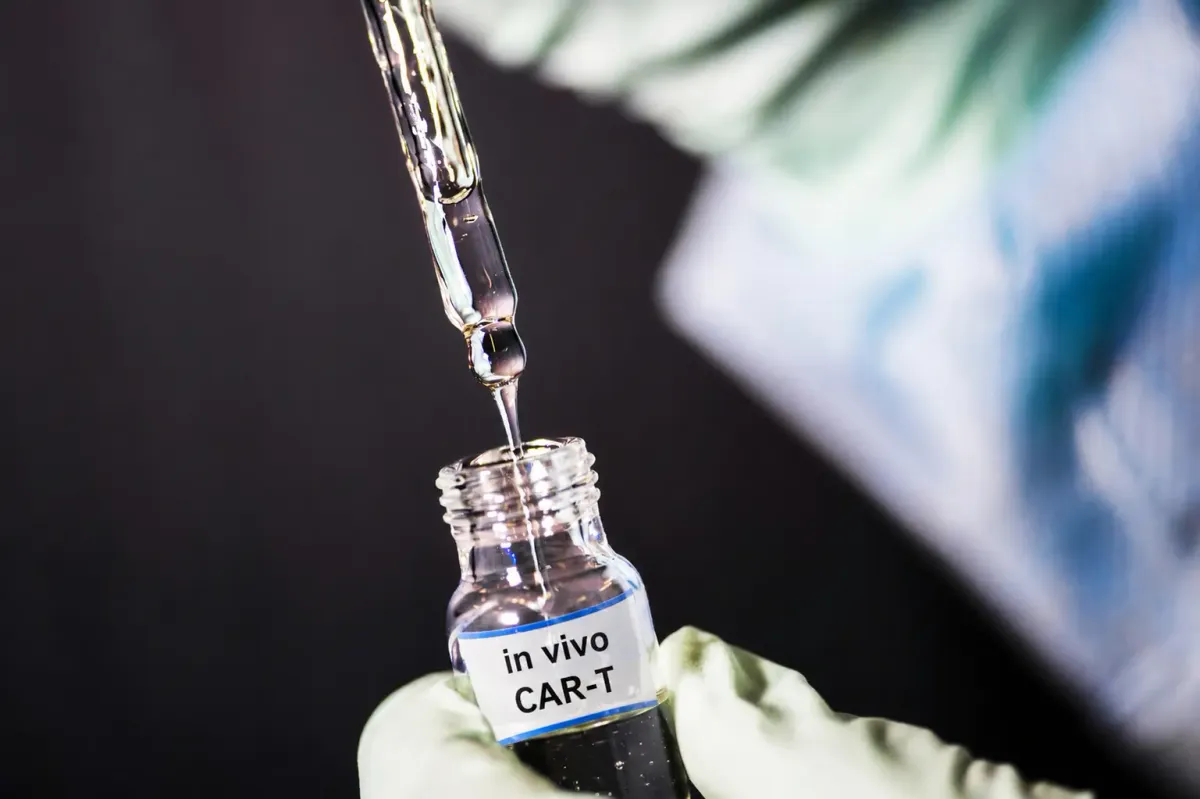
 ShaoChi CHENG
 ShaoChi CHENG
 ShaoChi CHENG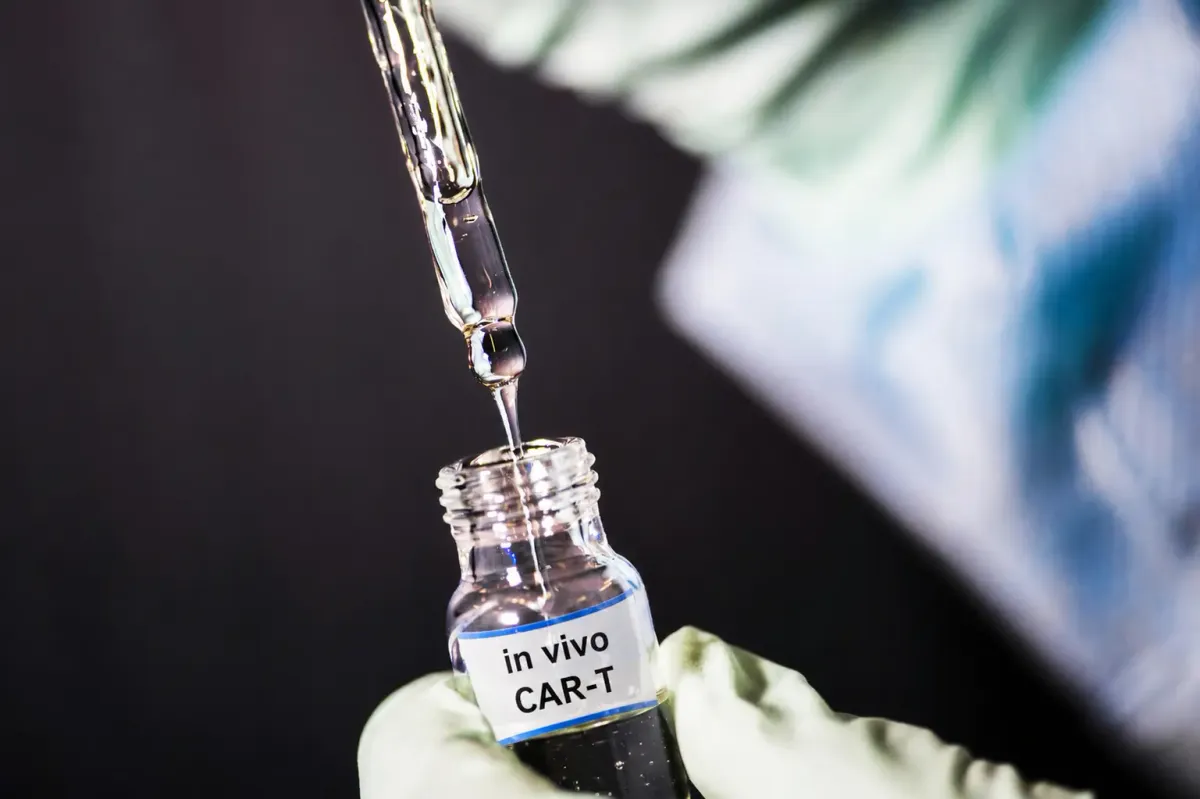
 ShaoChi CHENG
 ShaoChi CHENG