Why does a GMP manufacturing project take 6 months when R&D thinks 3 weeks should be enough? Explore the gap between lab processes and GMP-compliant CDMO production

I was once discussing an urgent manufacturing project with a PhD researcher from a national research institute. He needed to estimate the timeline and cost first, so he could take the proposal back to an internal meeting and decide whether to move forward.
He explained everything very clearly: the chemical properties of the material, the process they were using in the lab, the tests currently available, and the required production volume. Then he asked me to scope out what it would take to run this through CDMO manufacturing at a GMP facility: tasks, timeline, and budget.
I told him: at least six months.
His reaction went well past "surprised." He kept asking if there was any way to shorten it. (Honestly, I get this exact reaction from almost every client I talk to :P)
Leaving aside the fact that the CDMO already has other projects competing for production capacity, I explained that the timeline depends heavily on one thing: How mature is your production process?
That determines whether you already know the right production parameters, or whether you still need several rounds of testing to find out where the process actually works, and where it doesn't. Then there is all the additional work required for GMP manufacturing. Put these together, and the timeline naturally gets much longer.
But he still wasn't convinced. Six months sound too long to him. Fortunately, during our initial discussion, he was willing to tell me what he was really thinking. His logic was roughly this: “We just need to grow E. coli, break the cells open and collect the target material. We only need two tests, one quantitative and one qualitative. That means we use your large-scale fermenter to run one production batch and do the testing. Three weeks should be enough, right?”
I then asked him:
“So, in your mind, if we take the beakers, pipettes, and other equipment from the laboratory and move the process into a GMP facility, run one production batch, perform the tests, and get the result, that's GMP compliant?”
He nodded.
At that point, I knew exactly where the gap was. The scale-up work needed to turn a laboratory process into a reliable manufacturing process, and the quality-system work required for GMP production, were simply not included in his calculation.
This is actually a very common misunderstanding.
People sometimes treat “we successfully made the material in the lab” and “we can consistently manufacture the material in the factory” as if they were the same thing. Unfortunately, they aren't. For R&D, successfully making something can be a major milestone. For GMP manufacturing, that's only the beginning, because the scale is different, and a lot of GMP work needs to be done.
I spent some time walking him through the GMP quality system and what actually needs to be done to bring this material into the system and turn it into a GMP-compliant manufacturing process. One important question comes up early: What role does this material play in the final drug product? That can significantly affect how extensive the testing requirements need to be.
So why does pharmaceutical quality control have to be so picky?
Because when something goes wrong with a drug, it's not simply a matter of saying, “Well, this batch failed. Let's throw it away.” When drug quality affects public health, the consequences can go far beyond one batch of product.
Look at the history of pharmaceutical disasters, and you'll understand why today's quality and registration requirements are so strict. Many of today's detailed quality and regulatory requirements exist because someone, somewhere, already paid a very real price for not having them. Pharma just happens to run on GMP as its chosen standard.
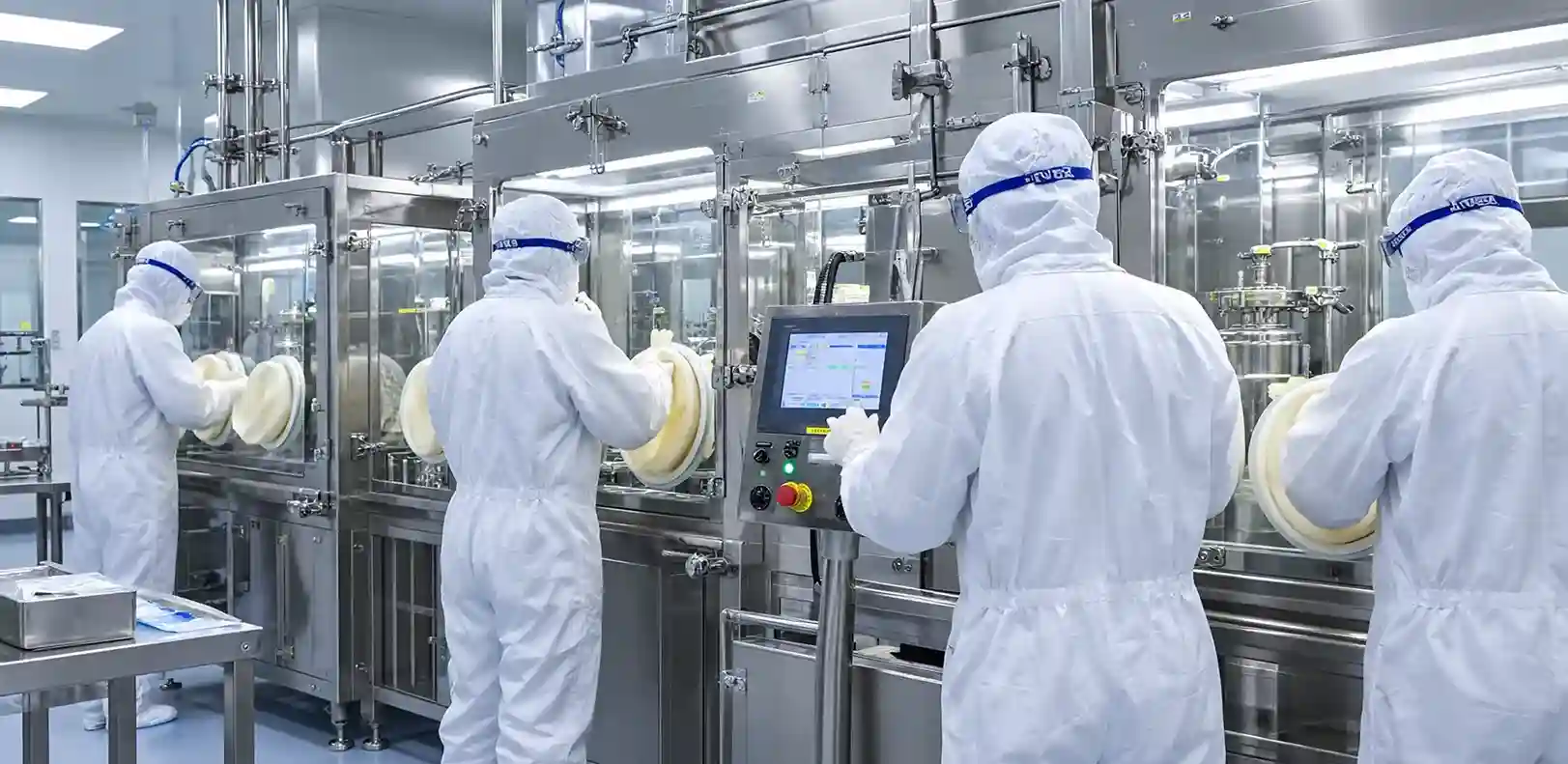
One more important point. Under GMP guidelines, manufacturing facilities producing clinical-trial materials are expected to operate in compliance with GMP requirements. In practice, that means the entire manufacturing process needs to be controlled under a GMP quality system. The manufacturing process, testing methods, equipment, facility, documentation, and many other activities all need to be properly managed and recorded.
That's why people in the industry sometimes joke that: GMP doesn't stand for Good Manufacturing Practice. It stands for “Give Me Paper.” It's a joke, of course. But the joke is more accurate than it sounds. The core spirit of GMP is: everything you do has to be recorded, traceable, and provable.
For a newly established facility, dealing with GMP compliance isn't just a technical hurdle; it's a strategic decision, and there's a staged way to approach it.
Early on, you can pick a "simple process, low cost" product as your demonstration case for the facility inspection, and prioritize getting the official GMP certification for the site itself. That certificate isn't issued for the specific drug your client wants, but it means the facility's quality system and physical operations have already been reviewed and approved by official regulators. For a CDMO, that's real, tangible credibility when it comes to winning orders.
From there, you can find clients willing to grow together, develop and manufacture their drug. You both move from clinical trials toward regulatory filing and facilities upgrade certifications in step with it. Or, you can pick competitive products and go after it for the future development.
Six months may sound ridiculous to someone who simply wants an answer as quickly as possible. But once you understand how GMP manufacturing works, you will know that six-month timeline isn't just about producing a batch of material. It includes the work required to build a controlled, documented, traceable, and verifiable manufacturing process.
The real question isn't: “Can you make it?”
The question is: “Can you make it consistently, under a controlled system, with evidence that proves exactly what you did?”
And unfortunately, there isn't a three-week shortcut for that. That's the gap between R&D and GMP manufacturing. It's also why a process that looks simple on a laboratory bench can become a very different project once you move it into a GMP facility.
Want to know more about GMP manufacturing or CDMO operation? Feel free to read series articles below, or reach out to me via Email or LinkedIn! Also welcome to share your thoughts or questions in the comments.
Feel free to sign up for free newsletter!
Subscribe for practical perspectives on biopharma BD, product market assessment, CDMO operations and cost, and commercializing new technologies.
Free · Unsubscribe anytime
About the author
Scientist-turned-strategist — work from researcher, pandemic vaccine PM, to strategic planning & global licensing BD. I share business, strategy and what I've gotten wrong and learned. Welcome to contact: harry@chivanta.com, and connect my LinkedIn.